

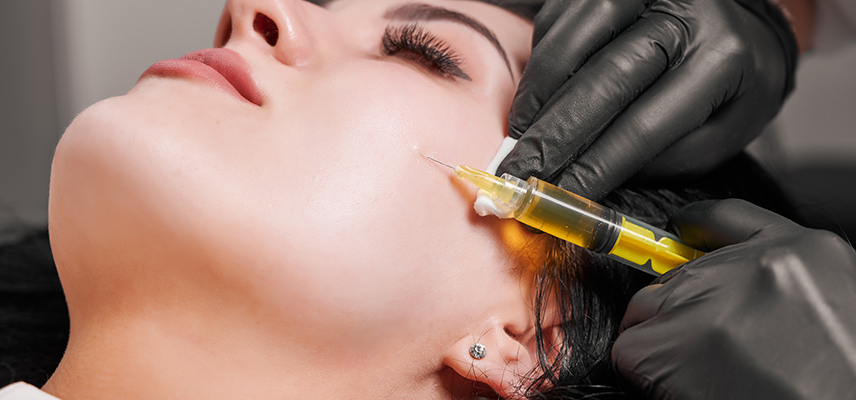
Platelet Rich Plasma: Regeneration by the Body's Own Power
Modern medicine is increasingly focusing on biological and regenerative therapies that activate the body's own repair mechanisms for musculoskeletal disorders and aesthetic applications. At the forefront of these innovative methods is the use of plasma derived from one's own blood. Platelet Rich Plasma treatment. This method aims to accelerate healing by using a completely natural and autologous (taken from the person himself/herself) source, without introducing any foreign substances or drugs into the body.
How Platelet Rich Plasma is Made
Platelet Rich Plasma treatment is based on cells in our blood called “platelets”. Platelets go far beyond their job of stopping bleeding in the event of an injury, they contain hundreds of powerful “growth factors” (growth factors) store them. These growth factors are signaling molecules of the body's natural repair mechanism.
When injected into a damaged tissue, these concentrated growth factors stimulate stem cells in the area, promote new blood vessel formation and initiate collagen production, which is essential for repairing the damaged tissue (cartilage, tendon or skin). In short, it strengthens the body's healing response naturally, not artificially.
How to Apply Platelet Rich Plasma?
It is a simple and safe procedure performed in a clinical setting:
- Blood Collection: A standard blood test (small amount) of blood is taken from the patient's own arm.
- Separation (Centrifugation): The blood is placed in a special centrifuge. This device spins the blood at high speed and separates it into its constituents; layers of red blood cells, normal plasma and platelet-rich plasma are formed.
- Injection The concentrated plasma, rich in platelet cells and growth factors, is carefully separated and injected directly into the damaged joint, tendon or tissue by the specialist under ultrasound guidance.
Platelet Rich Plasma Main Uses
This method, which does not carry the risk of allergy and is completely autologous, offers effective results in many different areas:
Joint Calcification (Osteoarthritis): To reduce pain and support cartilage repair, especially in knee, hip and shoulder arthritis.
Tendon and Ligament Injuries: Chronic tendon problems such as tennis elbow (lateral epicondylitis), heel spurs (plantar fasciitis), shoulder tendon tears and Achilles tendonitis.
Sports Injuries: To speed up the healing of muscle strains and some meniscus injuries.
Hair Loss Stimulating hair follicles to slow hair loss and improve hair quality.
Skin Rejuvenation: Skin resurfacing and scar treatment.
Frequently Asked Questions
This treatment involves taking a person's own blood, putting it through a special separation process called centrifugation and separating the plasma part of the blood, which is enriched with cells called "platelets". Platelets are rich in "growth factors" that initiate the body's natural healing mechanism. When this concentrated plasma is injected into the damaged area (joint, tendon, hair follicle, etc.), it powerfully triggers the repair process in that area, initiating cell regeneration and accelerating healing.
The procedure has a two-stage painful sensation. The first stage involves drawing blood from the arm, which is not unlike the pain during a normal blood test. The second stage involves injecting the prepared plasma into the target area (e.g. the knee joint). This may cause a short period of injection pain and a feeling of pressure in the area. The procedure is usually well tolerated and does not require anesthesia, but in some cases pain creams may be applied to the injection site.
Platelet Rich Plasma, because the person's own blood is used (autologous) no risk of allergic reaction. This is the biggest advantage of the treatment.
However, as with any injection procedure, there are some minimal risks:
Pain and Sensitivity: Temporary pain, tenderness or mild swelling at the injection site, which may last for a few days.
Bruising: Minor bruising may occur at the needle entry site.
Risk of Infection: If the procedure is not performed under sterile conditions (which is very rare), there is a risk of infection.
In some cases, this treatment is not recommended or not applicable:
People who use blood thinners (aspirin, heparin, warfarin, etc.).
Patients with a history of active cancer.
People with blood diseases (low platelet count - thrombocytopenia or clotting disorders).
Active infection or inflammation in the area to be treated.
Pregnant and breastfeeding women.
The number of sessions depends on the purpose of the treatment (orthopedic, hair, skin) and the severity of the problem.
Orthopedic (Joint/Tendon) Treatments: Generally, a total of 2 or 3 sessions are applied at intervals of 2-4 weeks.
Hair Loss A course of 3-6 sessions at 2-3 week intervals may be required.
Skin Rejuvenation: 3-4 sessions can be applied at 2-4 week intervals.
Your doctor may recommend maintenance sessions every 6 months or once a year to maintain the effect.
Platelet Rich Plasma does not work instantly like a painkiller; it is a repair and renovation starts the process. Signs of recovery (decrease in pain, increase in function) are usually 4 to 6 weeks after the first injection starts to be noticed. The maximum effect is observed in the months after the cure is completed.
Ozone therapy is included in the category of "Traditional and Complementary Medicine" (GETAT) applications in Turkey.
SSI: In GETAT units of state hospitals, certain conditions (such as herniated discs, diabetic wounds, rheumatic diseases) can be covered by the SSI. However, this is usually paid is a service and different from standard outpatient services. Cosmetic or anti-aging applications are not covered by SSI.
Private Health Insurance: Most private health insurance policies exclude complementary medicine from standard coverage. Some policies may include it as additional coverage. You should get the most accurate information from your insurance provider.

